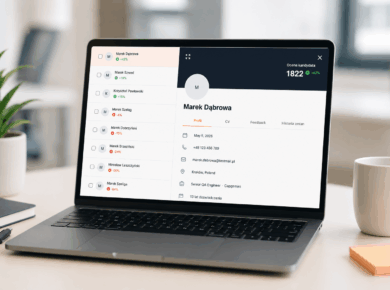
1. Define your needs and choose the right tools
Start by analyzing your current recruitment process:
- Identify bottlenecks (e.g., lengthy CV screening times, communication issues with candidates, challenges in managing interview schedules).
- Set clear goals: Do you want to speed up time-to-hire, improve candidate quality, or reduce the team’s workload?
2. Automate Job Posting and Application Collection
Manually posting job ads on multiple platforms is time-consuming. Use:
- Integrations with job boards: Tools like LinkedIn Talent Hub or popular ATS systems allow you to automatically distribute job offers across various platforms.
- Job description templates: Create ready-to-use templates that can be quickly customized for different roles. You can even leverage ChatGPT for this.
- Skill generation tools: Use tools like Hero Parser to identify the key skills required for specific positions.
3. Leverage AI for candidate screening
Screening hundreds of CVs is a tedious task. AI-powered solutions can:
- Analyze CVs for relevant experience and skills.
- Rank candidates—tools like Hero Parser help determine the optimal order to contact candidates.
- Detect mismatches (e.g., missing key skills, long commuting distances, insufficient language proficiency).
Note: Ensure that algorithms do not discriminate against candidates. Use tools that evaluate all applicants based on the same criteria.
4. Automate the interview process
Organizing initial interviews can be time-consuming. Automate this process through:
- Online scheduling tools: Platforms like Calendly or Doodle allow candidates to choose interview slots themselves.
- Recorded interviews: Platforms like VidCruiter enable candidates to record their responses at their convenience.
5. Automate feedback delivery
Use tools that send automated feedback based on CV analysis. Studies show that up to 81% of candidates who do not receive feedback will never apply again to an employer who failed to provide it.
6. Utilize AI in onboarding new employees
Automation doesn’t stop at hiring! Streamline the onboarding process with:
- Learning platforms: Tools like LearnUpon or TalentLMS offer ready-to-use courses.
- Automated reminders: For document submission deadlines or team meetings.
- Digital Employee Experience tools: Apps like BambooHR help manage documentation and support new employee integration.
Summary
Leveraging automation in recruitment leads to:
- Time savings – up to 50% less time spent on repetitive tasks
- Better candidate matches – algorithms reduce human error and ensure unbiased recruitment
- Improved candidate experience – faster communication and a more transparent process
Start with small changes, such as automating CV screening or interview scheduling. However, remember that automation cannot replace human empathy. The key is finding a balance between technology and personal interaction. Automate repetitive tasks and focus on meaningful face-to-face conversations with candidates.